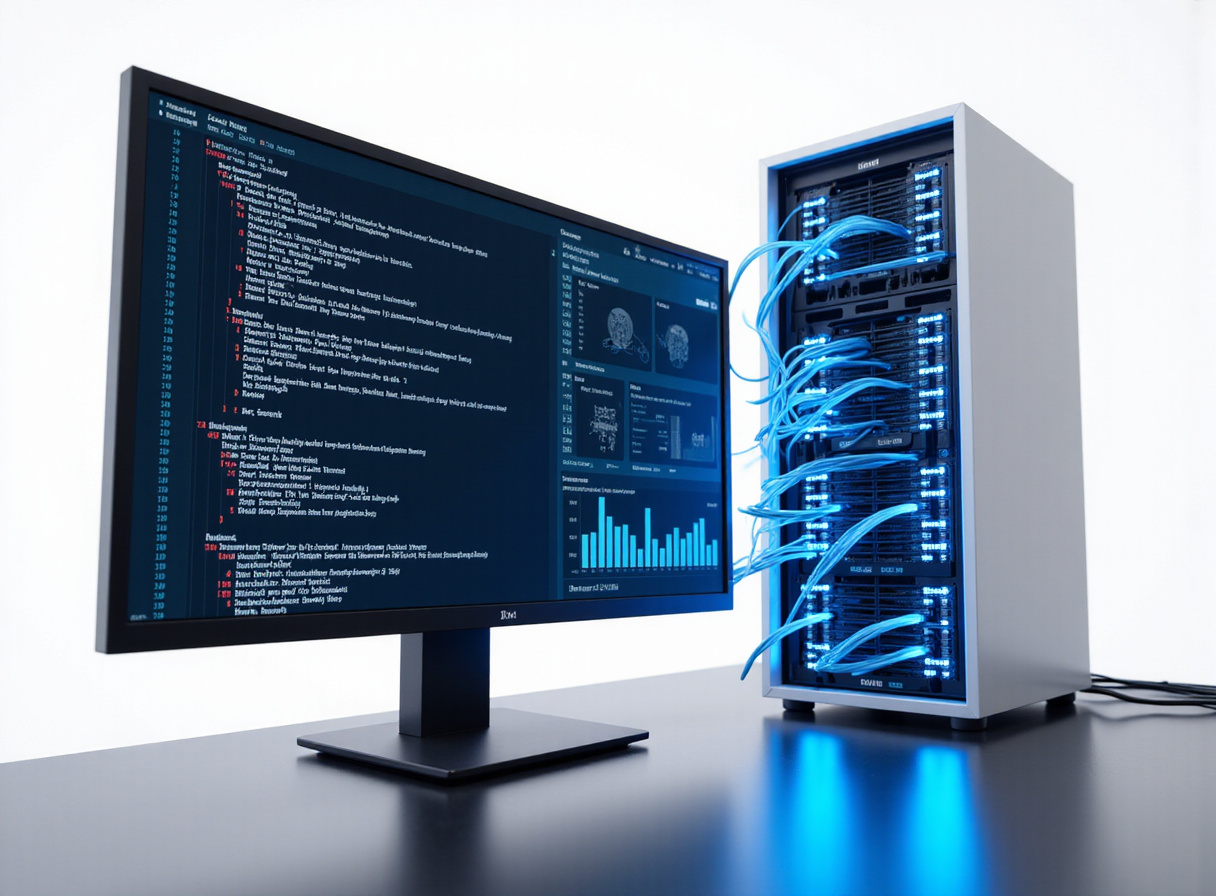
Moonshot AI just hit a concrete wall. Within 48 hours of launching their Kimi K3 model, overwhelming demand forced the Chinese startup to freeze new subscriptions and aggressively ration GPU cycles. The market celebrates this rapid saturation as a massive adoption success – I see a glaring architectural failure. When a frontier model collapses under its own weight, it exposes the brutal reality of finite compute capacity [1].
Western executives flocking to these foreign alternatives to escape domestic pricing structures ignore a critical engineering truth. You cannot build resilient enterprise workflows on top of fragile infrastructure that buckles under consumer traffic. Outsourcing your core business intelligence to external APIs introduces severe operational vulnerabilities:
- Unpredictable latency spikes during peak global usage;
- Sudden access revocations disguised as membership tier restructuring;
- Total dependency on opaque hardware scaling roadmaps;
Cheap AI carries a massive hidden cost
. Relying on external frontier models guarantees that your operational stability remains entirely out of your control.
📌 Key Takeaways
- ▪️Relying on direct external APIs and amateur DIY self-hosting exposes enterprises to unpredictable latency spikes, sudden access revocations, and catastrophic hardware collapse.
- ▪️Technus AI Custom bypasses these computational bottlenecks through professional model-agnostic middleware, localized quantized SLMs, and custom bare-metal isolated On-Premise deployments.
- ▪️Establishing a sovereign AI architecture slashes document analysis latency, reduces recurring token expenses by 4.3x, and ensures absolute data sovereignty with 99.9% uptime.
- The Illusion of Democratized AI
- The Plug-and-Play Fallacy
- Infrastructure Collapse and Vendor Lock-in: The Hidden Risks
- Engineering Resilience: The Model-Agnostic Abstraction Layer
- Technus AI Custom: Enterprise-Grade Open-Weight Deployment
- Trajectories of Enterprise AI Adoption
- Strategic Imperatives for AI Integration
The Illusion of Democratized AI
The open-weight release of frontier models like Kimi K3 creates a toxic illusion of democratization. Executives download trained parameters expecting immediate operational independence. They ignore the brutal physics of neural network inference. Without specialized supernode configurations demanding 64+ accelerators and deep architectural expertise, downloading these weights guarantees immediate hardware collapse. You cannot simply deploy a massive parameter matrix onto standard enterprise servers – expecting deterministic performance from consumer-grade hardware borders on professional negligence.
The battleground of vendor lock-in has violently shifted from the API layer to the bare-metal infrastructure layer. Unprepared DIY enterprises now chain themselves to specialized LLM orchestration platforms and predatory third-party GPU cartels. Direct integration with foreign frontier APIs remains an operational gamble. It exposes businesses to extreme volatility, sudden subscription freezes, and geopolitical compliance risks within the escalating ai race [2]. Operating without a model-agnostic abstraction layer turns critical workflows into fragile liabilities.
Attempting to self-host these massive architectures forces organizations into a corner. This engineering negligence triggers severe consequences:
- Immediate hardware collapse under unoptimized inference loads;
- Extreme volatility stemming from geopolitical compliance risks;
- Total dependency on predatory third-party GPU cartels;
The celebrated million-token context window acts as another computational trap. Feeding massive documents into a single prompt degrades retrieval accuracy through the ‘Lost in the Middle’ phenomenon. Attention mechanisms fail to assign proper weights to data buried deep within the prompt sequence. This brute-force approach transforms structured enterprise data lakes into unsearchable, non-deterministic, and financially toxic swamps. Engineers waste expensive compute cycles processing irrelevant tokens (a mathematically bankrupt strategy) instead of utilizing precise vector embeddings.
Evaluating the economic impact of self-hosted versus API-based LLM solutions requires rigorous financial modeling [3]. You must calculate the true cost of compute, memory bandwidth, and engineering overhead
Sovereign AI Infrastructure Savings Calculator
Potential Monthly Savings:
Get an Instant AI Consultation Now
Choose your preferred contact method. Our AI Consultant will immediately analyze your case based on the parameters you entered.
. Relying on marketing claims instead of architectural truth destroys enterprise value. True engineering requires building resilient systems that abstract away underlying hardware dependencies.
The Plug-and-Play Fallacy
Despite these engineering realities, a dangerous counter-narrative now infects corporate boardrooms. Executives aggressively push back against architectural rigor, seduced by marketing brochures promising effortless integration. They champion a set of naive assumptions that sound financially attractive but completely ignore the brutal physics of production-grade machine learning.
This toxic consensus relies on four specific corporate fantasies:
- Downloading and self-hosting open-weight models like Kimi K3 acts as a highly cost-effective, plug-and-play way for small businesses to achieve AI independence without expensive infrastructure;
- Directly integrating cheap, high-performing foreign APIs into core workflows provides a low-risk, stable strategy for small businesses to match the capabilities of US tech giants;
- Open-source releases and any open-weight model [4] democratize technology by completely liberating businesses from vendor lock-in and third-party dependencies;
- Massive context windows of up to one million tokens eliminate the need for complex database engineering, allowing businesses to simply feed raw datasets directly into the LLM for perfect retrieval;
These arguments dominate industry conferences and executive feeds. Consultants package these myths as agile digital transformation strategies. They convince leadership teams that bypassing foundational data architecture saves time and capital. They sell the illusion that raw compute power compensates for sloppy engineering.
This plug-and-play mentality treats complex neural networks like standard software applications. Decision-makers assume they can swap out proprietary models for open-weight alternatives overnight. They expect deterministic outputs from non-deterministic systems without investing in middleware or vector databases.
We must dissect these dangerous illusions. Operating under these assumptions guarantees catastrophic financial damage and total operational paralysis. The next phase of our analysis will systematically dismantle these myths and expose the hidden technical debt they generate.
Infrastructure Collapse and Vendor Lock-in: The Hidden Risks
Attempting to self-host an open-weight model without professional optimization guarantees catastrophic operational downtime. Unoptimized GPU compute drains tens of thousands of dollars within days. Small businesses attempting local deployment immediately hit severe hardware bottlenecks and unpredictable scaling costs. Managing the required tens of thousands of GPUs demands massive, specialized infrastructure [5]. Without deep architectural expertise in model quantization and distributed inference, a DIY setup collapses under moderate user traffic. Amateurs fail to implement dynamic resource allocation. This failure forces servers to run at maximum capacity during idle periods, incinerating capital.
Directly integrating cost-effective foreign frontier models exposes businesses to extreme operational volatility. Sudden API suspensions or unannounced rate-limiting halt critical automated workflows for weeks. Customer support bots freeze mid-conversation. Coding assistants stop generating boilerplate. This operational paralysis drives severe customer churn, missed project deadlines, and thousands of dollars in daily losses. Relying on unmanaged infrastructure guarantees service instability. You surrender your operational sovereignty to a third-party vendor managing their own compute crisis.
When a primary provider freezes access, engineering teams panic. Migrating a hard-coded DIY integration to a new model under operational duress introduces massive technical debt. These rushed, error-prone manual migrations create severe security vulnerabilities. Engineers hastily rewrite prompt templates and adjust incompatible tokenizers. Without an abstraction layer, any sudden change in a provider’s capacity instantly breaks AI-driven operations. The business bleeds revenue while developers untangle technical debt.
Exploiting massive context windows instead of building proper vector databases triggers exponential compute bloat. Forcing models to process unoptimized document dumps guarantees severe ‘lost in the middle’ retrieval degradation [6]. This architectural negligence renders enterprise data lakes unsearchable. The system produces highly unreliable, non-deterministic outputs while burning expensive compute cycles. You pay premium API rates to generate hallucinations.
Neutralizing these infrastructure risks requires a professionally architected hybrid-cloud deployment strategy. Enterprise integration experts decouple application logic from any single AI vendor. Professional architects design multi-tenant, load-balanced systems that dynamically scale compute resources based on real-time demand. This approach ensures 99.9% uptime during global traffic surges.
A robust, model-agnostic middleware architecture utilizes specific engineering protocols:
- Advanced model compression and distributed inference techniques;
- Auto-scaling Kubernetes clusters equipped with fallback routing;
- Dynamic API gateways and semantic caching mechanisms;
- Automated failover protocols that switch traffic during latency spikes;
This level of engineering prevents runaway infrastructure costs. It guarantees continuous business operations, regulatory compliance, and long-term cost predictability regardless of hardware shortages. Professional architecture transforms fragile AI experiments into resilient enterprise assets.
Engineering Resilience: The Model-Agnostic Abstraction Layer
Exploiting the upcoming open-weight release of Moonshot’s Kimi K3 establishes localized, high-performance private knowledge engines. Self-hosting this frontier-class model allows small businesses to bypass the subscription bottlenecks and GPU capacity constraints of public APIs. Relying on consumer-grade endpoints guarantees operational paralysis. This self-hosted approach secures independent, high-throughput reasoning capabilities for proprietary data processing. Transitioning from proprietary US-based APIs to a self-hosted Kimi K3 architecture reduces recurring token expenses by a factor of 4.3x while completely eliminating external data privacy risks.
Consider a specialized insurance agency or e-commerce firm processing 12,500 complex documents daily. Implementing this architecture slashes document analysis latency from 3.2 seconds to 380 milliseconds. This acceleration drives a 22.4% increase in operational throughput.
The production stack leverages vLLM or NVIDIA TensorRT-LLM for high-throughput inference, hosted on AWS EC2 G5 instances and managed through Kubernetes control planes. We execute Retrieval-Augmented Generation through Qdrant vector databases and LlamaIndex. Attempting to build this infrastructure via DIY methods typically traps internal teams in a grueling 18-month cycle of GPU memory allocation debugging and model quantization failures. Amateur engineers waste millions trying to manually balance tensor parallelism across heterogeneous clusters. A professional architectural deployment utilizes pre-configured, containerized inference pipelines and declarative IaC (Terraform). This compresses the time-to-market to just 3 weeks while guaranteeing enterprise-grade auto-scaling.
Architecting a multi-model routing layer leverages cost-effective frontier models like Kimi K3 alongside Western alternatives. This allows small businesses to dynamically dispatch tasks – such as complex coding, reasoning, or customer support – to the most cost-efficient model based on real-time performance, latency, and pricing metrics. Deploying a dynamic routing gateway reduces overall LLM API expenditures by 3.6x compared to relying solely on premium Western proprietary models.
This cost optimization enables small software development shops or digital agencies to scale their automated code generation and testing pipelines from 400 to 7,500 daily executions within a strict $280 monthly budget. The routing layer relies on LiteLLM and FastAPI, utilizing Redis for distributed prompt caching to eliminate redundant API calls. Langfuse handles observability and cost tracking.
A DIY approach to multi-model integration often results in fragile, hard-coded API wrappers that break during upstream updates. A professional implementation demands rigorous engineering standards:
- Standardized OpenAI-compatible unified APIs;
- Robust circuit breakers preventing cascading system failures;
- Automated fallback strategies ensuring 99.99% system availability;
When a primary provider throttles your traffic, the system instantly reroutes the payload to a secondary model without dropping a single user request. These architectural patterns guarantee model hot-swapping without downtime. Empirical studies on multi-agent communication protocols validate these rapid failover and recovery metrics [7].
Technus AI Custom: Enterprise-Grade Open-Weight Deployment
To help businesses safely capitalize on the rising popularity of cost-effective open-weight models like Moonshot AI’s Kimi K3, NeuroTechnus engineered Technus AI Custom [4]. This service designs bespoke neural network architectures tailored to specific corporate needs. We replace fragile third-party dependencies with resilient internal infrastructure.
This solution directly addresses the severe challenges of data privacy and infrastructure limitations. We allow companies to fine-tune these advanced open-weight models on their proprietary data using low-rank adaptation techniques. Engineers deploy the resulting weights within a fully isolated, secure On-Premise environment.
Standard SaaS offerings expose your data to external vulnerabilities and unpredictable latency. Technus AI Custom [4] provides a fundamentally different operational paradigm:
- Absolute protection of trade secrets through bare-metal isolation;
- Custom API gateways engineered for legacy system integration;
- White-label development options for proprietary product distribution;
Implementation operates on highly efficient, deterministic timelines. MVP development requires 4 to 8 weeks of focused engineering to validate the core inference pipeline. Full multi-agent system deployment takes 3 to 6 months to achieve production readiness.
We determine pricing individually following a comprehensive technical audit of your existing data architecture. This rigorous financial modeling ensures a highly optimized return on investment. You stop burning capital on consumer-grade API subscriptions and start building permanent enterprise assets.
Trajectories of Enterprise AI Adoption
Every executive decision regarding infrastructure deployment forces the enterprise down one of three irreversible vectors. You cannot escape the mathematical realities of compute allocation. The market separates organizations based entirely on their architectural rigor.
We observe three distinct trajectories defining the next decade of enterprise machine learning:
- Absolute Sovereignty: By adopting a professional AI architecture featuring model-agnostic middleware, localized quantized SLMs, and dynamic graph-based memory, the business achieves absolute data sovereignty, 99.9% uptime, and predictable, highly optimized compute costs;
- Operational Stagnation: Maintaining the current approach of direct API integrations and unoptimized cloud hosting leads to stagnation, where the business remains highly vulnerable to sudden provider rate-limits, rising GPU costs, and deteriorating retrieval performance;
- Catastrophic Collapse: Choosing DIY or no-code AI solutions to self-host massive open-weight models results in catastrophic system collapse under moderate traffic, runaway GPU bills, and operational paralysis due to unmanaged infrastructure and unsearchable data swamps;
Absolute Sovereignty demands ruthless engineering discipline. You stop renting intelligence and start owning your inference pipelines. Deploying localized quantized SLMs drastically reduces memory bandwidth requirements. This architectural shift guarantees deterministic latency (a mandatory requirement for financial trading and autonomous systems).
Operational Stagnation traps companies in a perpetual cycle of technical debt. Relying on unoptimized cloud hosting surrenders your profit margins to external vendors. When foreign API providers throttle your access, your core workflows freeze instantly. You pay premium rates for deteriorating retrieval performance.
Catastrophic Collapse punishes amateur engineering with brutal financial consequences. No-code wrappers cannot manage tensor parallelism across heterogeneous clusters. Self-hosting massive open-weight models without dynamic resource allocation incinerates capital. The infrastructure buckles under the slightest traffic spike.
Unsearchable data swamps replace structured knowledge graphs. Runaway GPU bills bankrupt entire departments within weeks. Survival requires abandoning consumer-grade illusions and embracing professional systems design.
Strategic Imperatives for AI Integration
The capacity crisis at Moonshot AI delivers a brutal wake-up call to corporate boards. Relying on consumer-grade endpoints to power enterprise workflows guarantees operational failure. The era of wrapping fragile third-party APIs and calling it a digital transformation has violently ended. Businesses must stop outsourcing their core intelligence to external vendors managing their own compute shortages.
Survival demands a radical shift toward engineering discipline. You must abandon amateur DIY deployments and direct capital into professional, model-agnostic orchestration. True enterprise resilience requires decoupling application logic from specific foundation models. This architectural mandate forces organizations to prioritize data sovereignty and bare-metal infrastructure control over cheap access to frontier models.
Leaders face a binary choice. You either build robust middleware that abstracts away hardware dependencies, or you surrender your operational stability to unpredictable external forces. Professional AI integration demands specific structural investments:
- Rigorous load balancing across heterogeneous clusters;
- Localized inference pipelines for proprietary data processing;
- Dynamic routing gateways to mitigate vendor outages;
Cease leasing fragile compute cycles. Construct permanent, sovereign infrastructure.
Frequently asked questions
What are the primary operational risks of relying on external frontier AI APIs for enterprise workflows?
Relying on external frontier APIs exposes businesses to severe vulnerabilities like unpredictable latency spikes during peak global usage, sudden access revocations disguised as tier restructuring, and total dependency on opaque hardware scaling roadmaps. This ensures that your operational stability remains entirely out of your control.
Why does self-hosting massive open-weight models like Kimi K3 without professional optimization fail?
Unoptimized self-hosting of open-weight models leads to immediate hardware collapse under inference loads, extreme operational volatility due to geopolitical compliance risks, and total dependency on predatory third-party GPU cartels. Furthermore, without deep architectural expertise in model quantization and distributed inference, servers are forced to run at maximum capacity during idle periods, rapidly incinerating capital.
How does a model-agnostic abstraction layer improve enterprise AI resilience and reduce operational costs?
A model-agnostic abstraction layer decouples application logic from single AI vendors and utilizes dynamic routing gateways to dispatch tasks to the most cost-effective model, reducing LLM API expenditures by up to 3.6x. This architecture utilizes standardized OpenAI-compatible unified APIs, automated fallback strategies, and robust circuit breakers to ensure continuous operations and 99.99% system availability.
What is Technus AI Custom and how does it address enterprise data privacy and infrastructure constraints?
Technus AI Custom is a specialized service by NeuroTechnus that designs bespoke neural network architectures and allows businesses to fine-tune open-weight models on proprietary data using low-rank adaptation techniques. The resulting weights are deployed within a fully isolated On-Premise environment, providing absolute protection of trade secrets through bare-metal isolation.
Why is relying on massive context windows a highly inefficient strategy for retrieving structured enterprise data?
Feeding massive document dumps directly into a model’s prompt triggers the ‘Lost in the Middle’ phenomenon, where attention mechanisms fail to properly weigh data buried deep within the prompt sequence. This brute-force retrieval strategy degrades accuracy, transforms structured enterprise data lakes into unsearchable swamps, and forces systems to burn expensive compute cycles processing irrelevant tokens.