AI in Business

  • All Post
  • AI Chatbots
  • AI in Business
  • AI Innovations
  • Business Process Automation
  • No Section
  • Practical Bot Use
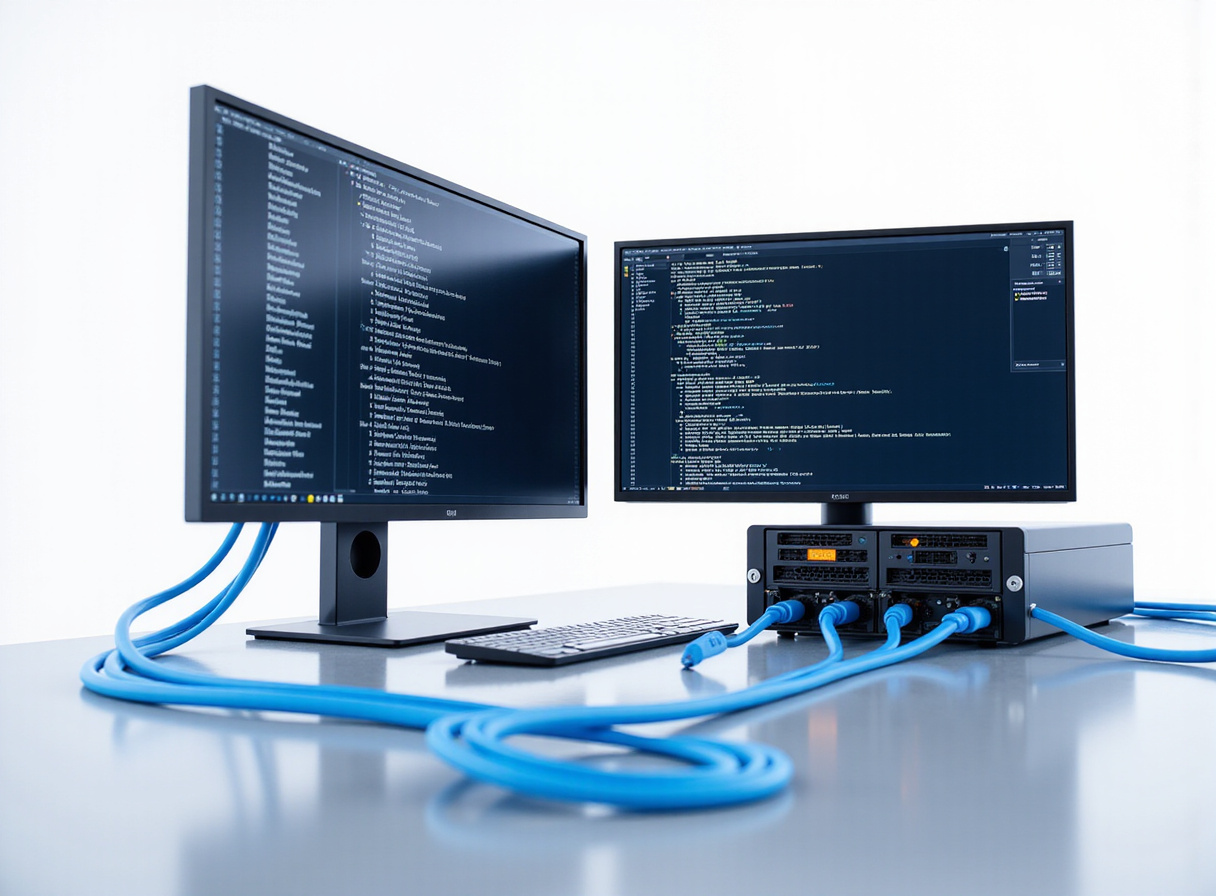
Dual-monitor workstation and server infrastructure enabling high-speed algorithmic commerce networks.

19.08.2026/

Enterprise capital floods into commerce artificial intelligence at record levels, yet enterprise outcomes remain relentlessly inconsistent. Boardrooms aggressively approve multi-million-dollar AI initiatives while customer-facing operations suffer from chronic fragmentation, context drops, and conversion decay. This widening performance gap exposes a predictable engineering failure. Retail leadership consistently deploys isolated point capabilities – conversational shopping bots, standalone vector search, fragmented personalization widgets – faster than technical teams build underlying connective infrastructure. The industry continuously mistakes software procurement for actual operational integration. The resulting architectural incoherence breaks user journeys across three distinct operational handoffs: Catalog and search layers surface out-of-stock inventory that transactional backends reject at checkout; Recommendation algorithms push irrelevant cross-sells while completely ignoring live cart context; Customer session states evaporate instantly...


Rack-mounted server infrastructure illustrating robust enterprise-grade AI architecture with illuminated processors and fiber optics.

16.08.2026/

Small and medium-sized business leaders stand at an unforgiving crossroads. The era of treating artificial intelligence as a playground for speculative software experiments has officially collapsed under the weight of macroeconomic realities. Today, capital efficiency dictates survival across North American markets, forcing executives to demand rigorous economic proof before allocating a single dollar to technological upgrades. Indiscriminate software procurement creates hidden operational liabilities rather than competitive leverage. Forcing neural architectures into poorly structured, legacy workflows generates crippling technical debt, inflates maintenance costs, and degrades core unit economics. True financial leverage emerges only when organizations align precise model architectures with high-friction, document-heavy operational bottlenecks. Navigating this transition requires abandoning corporate hype in favor of cold engineering discipline. Small enterprises must rethink...

Dual-monitor display showing software code and data nodes for enterprise RAG architecture.

13.08.2026/

Independent hospitality operators survive on brutal four-percent operating margins where single inventory errors destroy monthly profit lines. Meanwhile, aggressive software vendors push off-the-shelf generative wrappers promising instant operational transformation. They peddle financial fantasies to non-technical executives seeking quick fixes for deep systemic friction. Plugging an uncalibrated language interface into uncleaned point-of-sale databases triggers severe operational breakdowns: Hallucinated customer reservation policies; Inaccurate automated ingredient orders; Corrupted operational margin forecasting; Mainstream technology commentary glorifies autonomous models while ignoring physical supply chain realities and high worker turnover. Extracting actual bottom-line yield requires strict engineering truth rather than consumer hype. Enterprise performance demands specific architectural foundations: Clean, standardized data ingestion pipelines; Low-latency application interfaces; Deterministic execution safety guardrails; If your digital strategy relies on...

Dual-monitor workstation showcasing enterprise-grade AI architecture applications for modern real estate data processing.

10.08.2026/

Macroeconomic volatility and compressed inventory currently obliterate traditional brokerage margins. Real estate firms face three escalating operational pressures: Persistent interest rate hikes that suppress transaction volume; Bloated administrative overhead that drains payroll; Manual agent workflows that cap deal throughput; For decades, real estate firms tolerated severe operational drag – where agents spent up to sixty percent of their capacity performing routine data entry, drafting property descriptions, and chasing cold prospects (a catastrophic misuse of expensive sales bandwidth). Calculating the hidden financial burden of manual lead intake reveals how rapidly intelligent automation restores agent deal velocity. Evaluating your brokerage’s transaction volume against AI deployment costs provides a precise projection of recoverable margin and net annual ROI. Calculate Now Legacy brokerages face...

A rugged industrial computing device representing secure edge AI deployments in enterprise networks.

07.08.2026/

Liquid AI recently released LFM2.5-2.6B, a 2.6 billion parameter open-weight model engineered specifically for local agentic workloads. The marketing materials promise zero marginal token cost and the ability to execute complex background routines on hardware as constrained as a Raspberry Pi. Discard the hype. Deploying a dense neural network on edge devices triggers severe architectural friction. Memory bandwidth bottlenecks and thermal throttling will instantly degrade inference speeds during sustained production loads. The allure of free local compute blinds decision-makers to the brutal reality of edge AI. You trade predictable cloud API expenses for massive engineering overhead. Managing state, handling 128,000-token context window truncation, and ensuring operational reliability on limited silicon demands ruthless optimization. Treating this edge model as a plug-and-play...

Developer workstation displaying a stateful memory graph, illustrating secure enterprise AI architecture.

04.08.2026/

Enterprise teams burn millions deploying AI chatbots that suffer from terminal architectural amnesia. These stateless models answer a prompt and immediately wipe their context window. They fail to retain data from previous queries. They cannot verify if last month’s generated code actually compiled or if a marketing workflow drove revenue. True enterprise ROI demands a hard pivot toward stateful agentic systems [1] that operate as multiplayer teammates rather than isolated text generators. Asana attempts to solve this exact engineering bottleneck with its Agentic Work Management (AWM) operating system. AWM forces AI agents to share memory across the corporate infrastructure. The platform anchors these models to a persistent graph database. Without persistent state and shared memory, businesses merely subsidize expensive, one-off...

A high-tech computer monitor displaying secure code for reliable automated property management integrations.

02.08.2026/

The real estate rental sector bleeds capital through manual coordination. Traditional agencies rely on brute-force staffing to process inquiries. This human-centric model creates massive financial drag during market contractions The financial drain of manual coordination and the risks of amateur automation are significant. Understanding the true return on investment for professional automated property management can reveal substantial untapped financial upside. Calculate Now . Solo operators now bypass these legacy bottlenecks using deterministic neural network architectures. They execute high-volume administrative workflows at near-zero marginal cost. Time latency destroys deal flow. A thirty-minute delay in response guarantees a lost lease. Artificial intelligence functions as a survival baseline today. Yet, deploying amateur chatbot wrappers guarantees operational ruin. Slapping a basic language model onto...

A secure server rack processing cryptographic data streams for automated agentic commerce transactions.

31.07.2026/

Mastercard evaluates 175 billion transactions annually. The network executes this judgment in under 100 milliseconds. For decades, financial institutions engineered risk frameworks with a singular objective: block automated bots from transacting. That architecture now faces obsolescence. The buyer on the other side of the transaction protocol has changed. Autonomous neural networks now execute purchases. This forces a violent pivot toward agentic commerce [1]. Legacy fraud systems classify these autonomous agents as hostile threats. Financial networks must now re-engineer their entire risk infrastructure to authorize the very entities they previously neutralized. This requires a fundamental rewrite of transaction scoring models. You cannot patch legacy rules to accommodate autonomous procurement. You must build verifiable intent and agentic identity directly into the transaction...

A computer monitor displaying glowing code and structured nodes for semantic data extraction.

29.07.2026/

Legacy data extraction pipelines died years ago. For a decade, engineering teams burned millions maintaining fragile Python scripts tied to static DOM coordinates. A single CSS update shattered the entire pipeline. Today, large language models bypass structural HTML entirely. They execute semantic extraction directly from the visual and textual payload. Vendors sell this transition as a no-code utopia. They lie. The shift from deterministic code to probabilistic neural networks democratizes access but introduces catastrophic architectural vulnerabilities. Business leaders blindly deploy autonomous agents (often disguised as magical SaaS wrappers) without understanding the underlying token economics. This ignorance destroys ROI Unoptimized AI agents can silently erode your bottom line, but a clear understanding of your intelligent web scraping ROI can transform potential...

A professional computer monitor displaying a structured state-machine diagram representing secure multi-agent orchestration.

27.07.2026/

Software vendors sell a dangerous fiction. They market autonomous AI agents as plug-and-play replacements for human labor. Founders buy this narrative blindly. They deploy multi-agent orchestrations expecting immediate operational cost reductions. Instead, they ignite a financial bonfire. The engineering reality shatters the marketing illusion. Agentic systems demand rigorous architectural discipline. Without strict state management, these deployments collapse under their own computational weight. You do not get a tireless digital workforce. You get a fragile infrastructure that generates severe technical liabilities: Compounding error rates across sequential LLM calls; Infinite run loops triggered by failed reflection protocols; Skyrocketing API costs that obliterate profit margins; Small and medium businesses lack the capital to absorb these architectural failures. A single misconfigured sub-agent drains monthly...

Load More

End of Content.