Shortly after Amazon CEO Andy Jassy announced AWS’s groundbreaking $50 billion investment deal with OpenAI [1], the tech giant extended a rare, exclusive invitation: a private, behind-the-scenes tour of the secretive chip development lab at the very heart of this historic partnership. This monumental $50 billion deal with OpenAI, including a 2-gigawatt Trainium capacity commitment, positions AWS as a critical infrastructure provider for the next generation of AI agents. The stakes in the rapidly evolving landscape of Cloud computing are higher than ever, a trend similarly highlighted in our recent coverage of the Cloudflare AI Agents SDK v0.5.0: Rust Infire Engine for Edge AI [2]. Tucked away in a sleek high-rise in Austin, Texas, the Annapurna Labs facility serves as the nerve center where Amazon engineers work around the clock to design the custom silicon powering this massive AI gamble. The overarching goal is clear and highly aggressive: to establish a powerful alternative to Nvidia and challenge its near-monopoly in the AI hardware space by offering faster, significantly more cost-effective options for both model training and inference. As I walked through the noisy, fan-filled industrial rooms of the lab, witnessing the grueling bring-up process of the new liquid-cooled Trainium3 chips, the sheer scale of Amazon’s ambition became undeniable. This operation is not merely about building better servers; it is a calculated, high-stakes mission to rewrite the underlying economics of artificial intelligence from the ground up.
- The Hardware Revolution: 3nm Chips, Liquid Cooling, and Virtualization
- The ‘Bring-Up’ Crucible: Engineering Under Pressure
- Breaking the Nvidia Monopoly: Cost, Performance, and the Software Moat
- Industry Validation: Anthropic, Apple, and the 2-Gigawatt Commitment
- The Roadblocks: Legal Battles, Supply Chains, and Margins
- Three Paths Forward for Amazon’s Silicon Ambitions
The Hardware Revolution: 3nm Chips, Liquid Cooling, and Virtualization
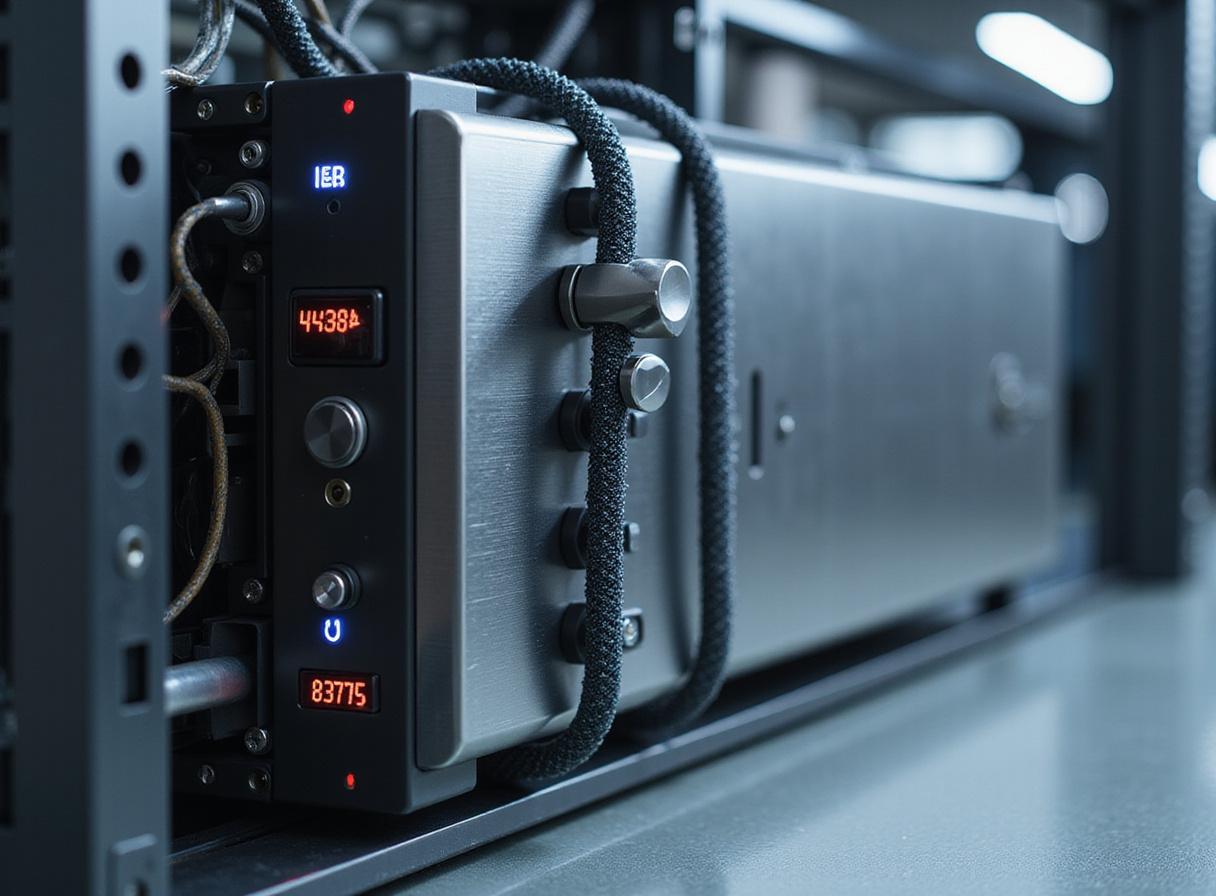
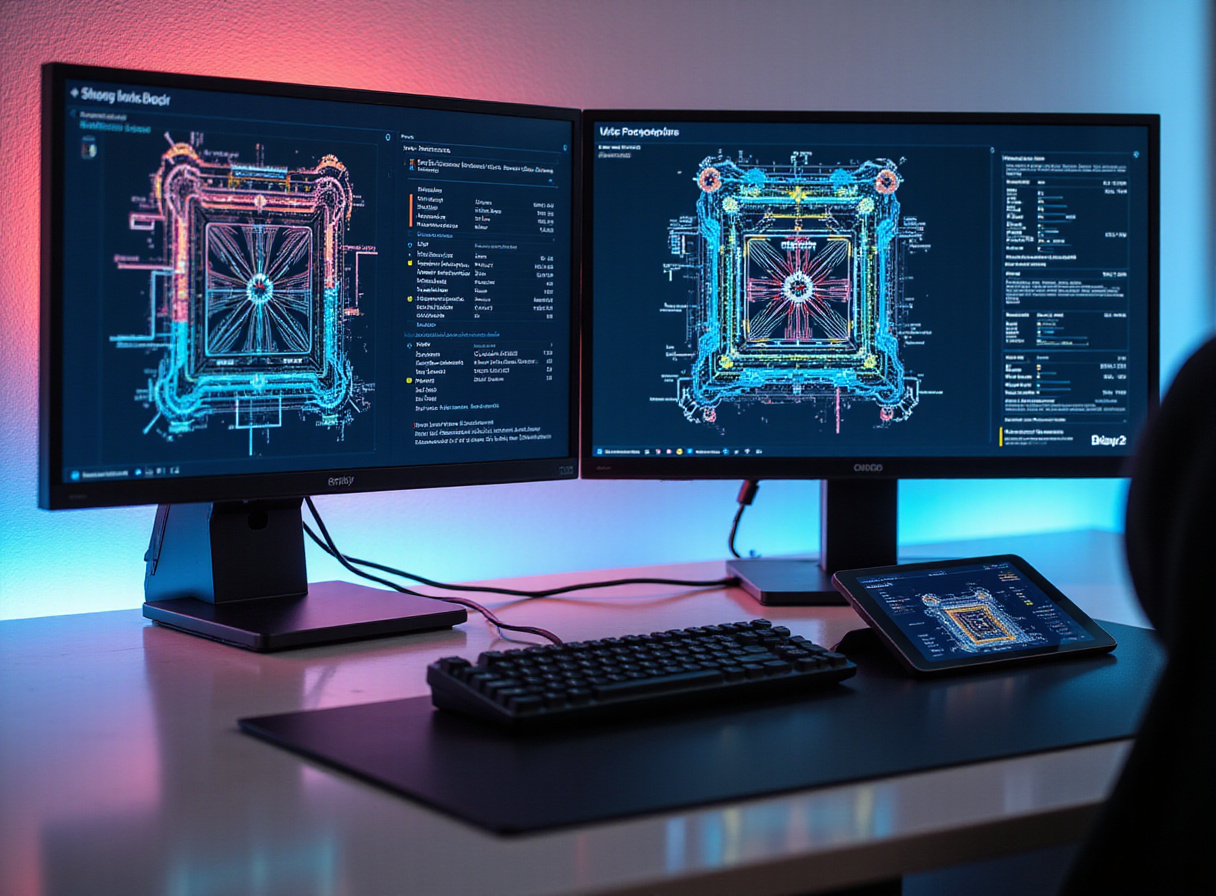
Tucked away in a sleek, chrome-windowed building in Austin’s upscale Domain district, the actual Trainium development lab feels worlds apart from a standard corporate office. The space, roughly the size of two large conference rooms, hums with the deafening roar of equipment fans. It exudes a distinct high school shop class vibe, albeit one populated by engineers in jeans rather than white lab coats, working alongside welding stations and microscopes to manipulate some of the world’s most advanced hardware.
At the center of this industrial chaos is the state-of-the-art Trainium3. Manufactured by industry leader TSMC, this processor is a 3-nanometer (3nm) chip, a measurement referring to the size of the tiny transistors on a chip. Smaller measurements like 3nm allow for more processing power and better energy efficiency to be packed into the same physical space. This relentless push for in-house Custom silicon, a trend similarly highlighted in the recent coverage of the Nscale Board of Directors: Sandberg, Clegg Join as Stargate Norway Startup Hits $14.6B [3], is what allows Amazon to aggressively compete on both price and aws trainium performance.
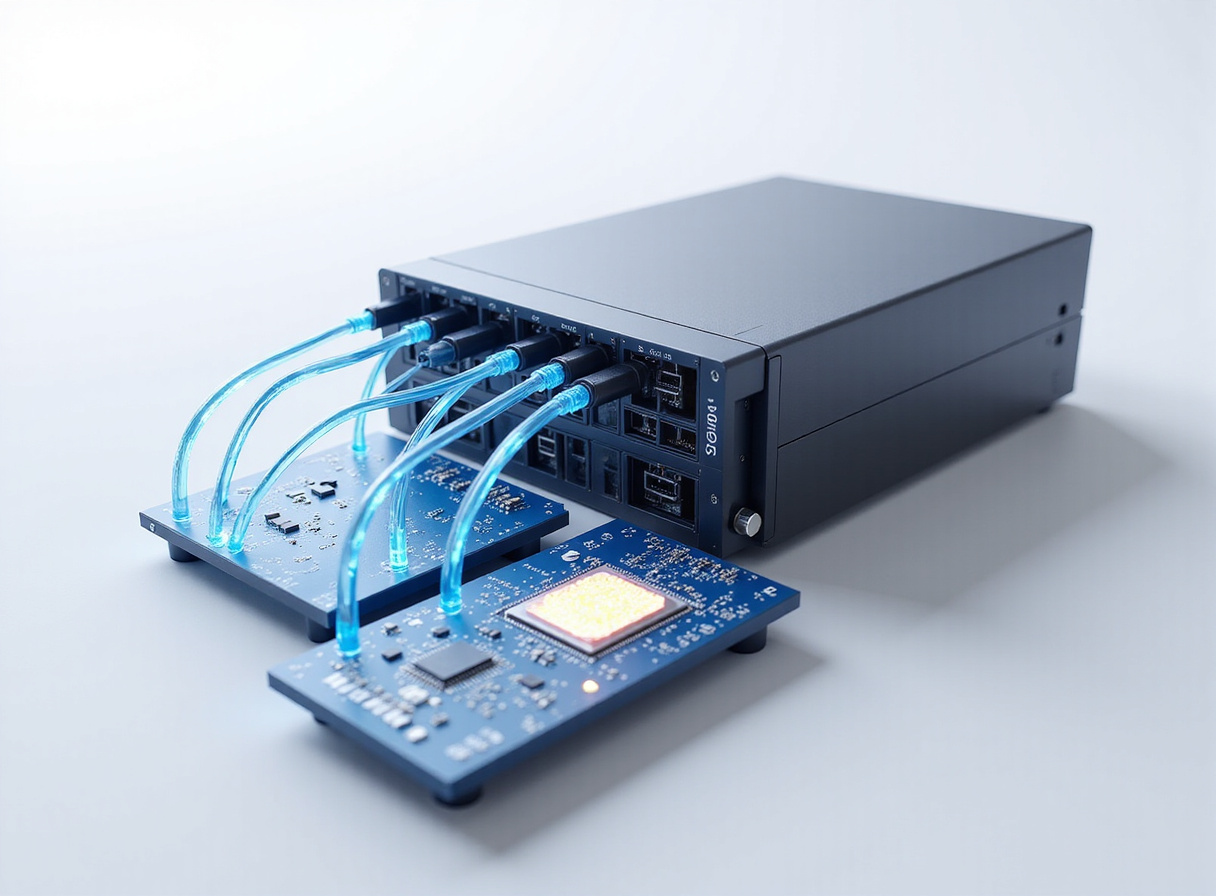
Bringing these chips to life requires monumental engineering feats. Unlike its air-cooled predecessors, the Trainium3 utilizes advanced chip liquid cooling, relying on a sophisticated closed-loop system. The transition to liquid-cooled 3nm Trainium3 chips and custom ‘Neuron’ switches signifies a major leap in power efficiency and low-latency mesh networking for large-scale AI inference. These components are meticulously packed into custom-designed server sleds, which are trays that house the AI chips, CPUs, and supporting boards before being stacked into massive racks.
Beyond the physical hardware, the lab’s secret weapon is Nitro, a proprietary hardware-software combination designed to manage immense workloads. Nitro handles Virtualization, a technology that allows a single physical server to be divided into multiple ‘virtual’ servers. This allows cloud providers to securely host many different customers and applications on the same hardware simultaneously, squeezing every ounce of efficiency out of the infrastructure.
However, pushing the boundaries of physics and engineering comes with inherent trade-offs. The technical reality is that the complexity of liquid-cooling and high-density ‘UltraServers’ increases the risk of hardware failure and maintenance downtime in critical clusters. When a single millimeter of misalignment on a heat sink requires engineers to literally grind down metal during a chip’s initial bring-up phase, it becomes clear that maintaining these hyper-dense, liquid-cooled behemoths will demand an entirely new level of operational precision.
The ‘Bring-Up’ Crucible: Engineering Under Pressure
Behind the pristine chrome windows of Amazon’s Austin lab, the reality of custom chip development is far less glamorous and far more intense. The true test of the team’s 18-month development cycle culminates in an event known as silicon bring-up. This is the initial process of powering on and testing a newly manufactured chip for the first time to ensure it functions correctly. It is a high-pressure phase where engineers identify and fix hardware flaws before mass production.
Lab director Kristopher King describes this milestone as a massive overnight party, a lock-in where engineers practically live at the facility. But this celebration is rarely without its hurdles. Activating a state-of-the-art piece of silicon is a crucible of troubleshooting, and the recent Trainium3 prototype was no exception.
Unlike its air-cooled predecessors, the Trainium3 features an advanced liquid-cooling architecture. During its bring-up, the team discovered a critical physical flaw: the dimensions for attaching the chip to its heat sink were slightly off, preventing activation. Unfazed by the setback, the engineers resorted to brute force. They procured a metal grinder to manually shave down the component. Not wanting the harsh screech of grinding metal to ruin the pizza-fueled camaraderie in the main lab, they quietly slipped into a nearby conference room to perform the makeshift surgery.
This gritty, do-whatever-it-takes mentality is born out of immense corporate pressure. The scrutiny on this specific engineering team has reached unprecedented levels, extending all the way to the top of the corporate ladder. Amazon CEO Andy Jassy keeps a notoriously close eye on the lab’s progress, frequently championing their hardware in public and highlighting it as a multibillion-dollar pillar of AWS’s future.
Knowing the stakes, the engineering team willingly endures grueling 24/7 work cycles for three to four weeks around every bring-up event. Their singular focus is to resolve any anomalies so the chips can be rapidly mass-produced and deployed into data centers. As director of engineering Mark Carroll notes, the ultimate goal is to prove the silicon works as fast as humanly possible. In this high-stakes environment, failure simply is not an option.
Breaking the Nvidia Monopoly: Cost, Performance, and the Software Moat
Amazon is aggressively pursuing vertical integration by designing in-house AI chips, including Trainium, Graviton, and Inferentia, to challenge Nvidia’s market dominance and reduce infrastructure costs. A key part of this strategy relies on raw economics. Regarding aws trainium 3 pricing, Amazon says its new aws trainium instances, running on specialty Trn3 UltraServers, cost up to 50% less to run for comparable performance than using classic cloud servers. [4]
While early silicon battles focused heavily on model training, a phase we recently highlighted in the article “AI Toy Data Breach: 50,000 Child Chats Exposed, Urgent AI Safety Concerns” [5], the industry’s biggest bottleneck has shifted. The new frontier is AI inference, a competitive space we explored in “AI Fast Inference: Taalas Hardwired Chips Hit 17,000 Tokens/Sec, Replacing GPUs” [6]. For context, AI inference is the stage where a trained AI model processes new information to provide an answer or result. While ‘training’ is how the AI learns, ‘inference’ is how the AI is actually used by customers in real-time.
To optimize this critical phase, AWS has introduced custom Neuron switches alongside its latest silicon. These switches allow every Trainium3 chip to communicate seamlessly with one another in a mesh configuration, drastically reducing latency. Latency is the time it takes for data to travel from one point to another within a system. In AI, low latency is essential for applications that require instant responses, such as voice assistants or real-time translation.
Yet, superior hardware and lower costs are only half the battle. Historically, the ultimate barrier for nvidia cuda alternatives has been the formidable software moat anchored by its proprietary CUDA platform. To encourage adoption, AWS is focusing on the pytorch aws trainium integration, supporting open-source frameworks like PyTorch to allow for near-seamless migration from Nvidia-based environments to Trainium. Amazon engineers tout that transitioning workloads often requires just a simple adjustment before recompiling. However, a pragmatic counter-argument persists for cuda alternatives: despite claims of ‘one-line’ code changes, deep hardware-level optimization for Nvidia’s CUDA remains a significant barrier to mass adoption of alternative silicon.
Industry Validation: Anthropic, Apple, and the 2-Gigawatt Commitment
Amazon’s custom silicon strategy has transcended its origins as an internal cost-saving initiative to become a foundational pillar for the world’s most demanding technology giants. Major industry players, including Anthropic and Apple, have validated Amazon’s silicon strategy, with Anthropic already deploying over 1 million Trainium2 chips for its Claude models. This level of market acceptance underscores a significant shift in the artificial intelligence hardware landscape, proving that Amazon Web Services can deliver viable nvidia gpu alternatives and high-performance options to challenge traditional GPU monopolies.
The validation comes from notoriously secretive corners of the industry. In a rare moment of public transparency in 2024, Apple’s artificial intelligence leadership openly praised Amazon’s chip design team. Apple highlighted its successful utilization of the low-power Graviton server CPUs and the inference-optimized Inferentia chips, while also acknowledging the potential of the newly introduced Trainium architecture.
However, it is Anthropic that truly illustrates the massive scale of Amazon’s hardware deployment. The artificial intelligence lab relies heavily on AWS infrastructure to train and run its cutting-edge models. This partnership is anchored by Project Rainier, one of the world’s largest AI compute clusters, which went live with an initial half-million chips. The scale of this operation is staggering. Industry data confirms that there are 1.4 million Trainium chips deployed across all three generations, with anthropic’s claude models running on over 1 million of the Trainium2 chips deployed. [7]
Beyond Anthropic, Amazon has secured a groundbreaking investment deal with OpenAI, further cementing its position at the center of the generative AI boom. As part of this exclusive arrangement, AWS has committed to supplying OpenAI with a colossal 2 gigawatts of Trainium computing capacity. This sheer volume of power and infrastructure is not just about training large language models; it is a strategic maneuver that positions AWS as the undisputed backbone for the next generation of autonomous AI agents. By securing the computing engines for both Anthropic and OpenAI, Amazon is proving that its custom silicon is ready to power the future of the global AI economy.
The Roadblocks: Legal Battles, Supply Chains, and Margins
Despite the undeniable engineering triumphs on display inside the Austin lab, Amazon’s path to AI hardware dominance is fraught with formidable obstacles. The transition from designing cutting-edge silicon to executing a flawless global rollout exposes AWS to a complex web of legal, economic, and environmental risks.
The most immediate threat looms over the crown jewel of Amazon’s recent strategic maneuvers: the massive investment and exclusive partnership with OpenAI. While this agreement positions AWS as the sole provider of the model maker’s new AI agent builder, this exclusivity may not go unchallenged. The Financial Times reported this week that Microsoft may believe OpenAI’s deal with Amazon violates its own deal with OpenAI [8]. Potential litigation between Microsoft and OpenAI regarding partnership exclusivity could severely disrupt AWS’s deployment plans, ultimately undermining Amazon’s strategic advantage in the rapidly expanding AI agent market.
Beyond the courtroom, Amazon faces harsh physical and geopolitical realities in its supply chain. The Trainium3 is a marvel of modern engineering, but Amazon’s reliance on TSMC for 3nm manufacturing means it shares the exact same geopolitical and supply chain vulnerabilities as its fiercest competitors. Any disruption in overseas fabrication would immediately bottleneck Amazon’s ambitious deployment schedules.
Furthermore, the sheer scale of Amazon’s infrastructure build-out introduces profound economic risks. The massive capital expenditure required for custom silicon R&D and the construction of sprawling 2-gigawatt data centers could heavily pressure AWS margins if AI demand fails to meet the industry’s highly optimistic projections. These high R&D and manufacturing costs for 3nm chips could lead to severe financial strain if the broader AI market experiences a sudden cooling period.
Finally, the physical footprint of these ambitions cannot be ignored. The massive energy requirements, specifically the staggering 2GW commitment for a single deal, pose significant environmental sustainability challenges. Even with innovations like closed-loop liquid cooling, consuming power on the scale of a small city may soon trigger intense regulatory scrutiny, forcing Amazon to defend not just the financial cost of its AI ambitions, but their toll on the planet.
Three Paths Forward for Amazon’s Silicon Ambitions
Amazon’s multi-billion dollar gamble on custom silicon is a masterclass in vertical integration. The impressive engineering feats witnessed inside their Austin lab – from liquid-cooled 3-nanometer chips to custom-built server sleds and advanced networking switches – demonstrate a clear cost and performance advantage over traditional hardware. However, looming legal friction with Microsoft over the OpenAI partnership and the inherent technical hurdles of mass-producing cutting-edge silicon present significant risks to this momentum. As this high-stakes ecosystem matures, three distinct paths emerge for AWS. In a highly positive scenario, Amazon successfully breaks the Nvidia monopoly, becoming the primary low-cost provider for AI inference and capturing the majority of the emerging AI agent market. A more neutral outcome sees Trainium becoming a successful secondary alternative to Nvidia for large-scale enterprises, maintaining AWS’s market share without completely displacing the GPU incumbent. Conversely, a negative scenario could unfold if legal disputes with Microsoft and technical challenges in 3nm production stall Trainium’s rollout, allowing Nvidia to consolidate its lead with next-generation architectures. Ultimately, while Nvidia’s entrenched dominance and vast developer ecosystem remain formidable, Amazon’s relentless drive to control its hardware stack from the silicon up proves that the GPU king is no longer untouchable. Vertical integration might not dethrone the incumbents overnight, but it has permanently reshaped the AI computing battlefield.
Frequently Asked Questions
What is Amazon’s main goal with its $50 billion AI investment?
Amazon’s overarching goal with its $50 billion AI investment, including a 2-gigawatt Trainium capacity commitment, is to establish a powerful alternative to Nvidia. It aims to challenge Nvidia’s near-monopoly in AI hardware by offering faster and significantly more cost-effective options for both model training and inference. This initiative is a high-stakes mission to rewrite the underlying economics of artificial intelligence.
What are the key technological innovations in Amazon’s Trainium3 chips?
The Trainium3 processor is a state-of-the-art 3-nanometer (3nm) chip, manufactured by TSMC, which allows for greater processing power and energy efficiency. Unlike its predecessors, it utilizes advanced chip liquid cooling through a sophisticated closed-loop system. These components are meticulously packed into custom-designed server sleds, enhancing power efficiency and low-latency mesh networking for large-scale AI inference.
How does Amazon plan to compete with Nvidia in the AI hardware market?
Amazon plans to compete by designing in-house AI chips like Trainium, Graviton, and Inferentia, offering up to 50% lower running costs for comparable performance. Beyond hardware, AWS is focusing on software integration, supporting open-source frameworks like PyTorch to facilitate migration from Nvidia-based environments. This strategy aims to overcome Nvidia’s formidable CUDA software moat.
Which major companies are validating Amazon’s custom silicon strategy?
Major industry players like Anthropic and Apple have validated Amazon’s silicon strategy, with Anthropic already deploying over 1 million Trainium2 chips for its Claude models. Apple has also praised Amazon’s chip design team for its Graviton server CPUs and Inferentia chips, acknowledging the potential of the Trainium architecture. Additionally, Amazon secured a groundbreaking investment deal with OpenAI, committing 2 gigawatts of Trainium computing capacity.
What are the primary challenges Amazon faces in its AI hardware ambitions?
Amazon faces several formidable obstacles, including potential litigation with Microsoft over OpenAI’s partnership exclusivity, which could disrupt deployment plans. Furthermore, reliance on TSMC for 3nm manufacturing exposes it to geopolitical and supply chain vulnerabilities. The massive capital expenditure and staggering energy requirements also introduce significant economic risks and environmental sustainability challenges.