A secret is percolating through the salons and dinner parties of New York City’s elite. It’s a whispered name, a coveted piece of technology that has become the ultimate status symbol for those in the know. The name is Fortell. At its core, Fortell is a hearing aid, one that claims to use AI to provide a dramatically superior aural experience [1]. But it’s much more than that. Through an exclusive beta program featuring high-profile testers like Steve Martin, it has achieved a mystique akin to a limited-edition Birkin bag. The device’s allure stems from its promise to conquer the infamous ‘Cocktail Party Problem,’ isolating speech with stunning clarity in the most chaotic environments. This fusion of groundbreaking AI, social proof from the powerful, and deliberate scarcity has transformed a hearing aid into a whispered revolution – one you can only join if you know the right people.
- A Founder’s Mission: The Personal Quest to Solve the ‘Cocktail Party Problem’
- The Tech Trinity: AI, Custom Silicon, and High-Stakes Capital
- The Science of Hearing: A Clinical Showdown and the Question of Proof
- The Velvet Rope Strategy: High Price, Limited Access, and Future Risks
- Expert Opinion: Specialized AI as the Next Frontier
A Founder’s Mission: The Personal Quest to Solve the ‘Cocktail Party Problem’
The genesis of Fortell is not found in a boardroom but at a family dinner table, steeped in the quiet regret of co-founder and CEO Matt de Jonge. He painfully recalls watching his grandparents, one by one, retreat into social isolation. Despite being fitted with expensive hearing aids, they gradually lost the ability to follow conversations, eventually ceasing to engage altogether. The subsequent isolation, de Jonge believes, hastened their cognitive decline. “I had given up on them,” he admits with remorse. “I feel like I have blood on my hands.” This deeply personal failure ignited a quest. While working on the AI team at the hedge fund Bridgewater Associates, de Jonge dedicated his nights and weekends to understanding why existing hearing aids were failing his loved ones.
His research quickly pinpointed the industry’s central, unsolved challenge. The problem wasn’t merely about amplification or basic noise reduction; it was about clarity in chaos, a common issue for those experiencing spatial hearing loss. The worst situations occur in restaurants and social gatherings with lots of cross conversations. That’s known in the trade as the ‘Cocktail Party Problem,’ a challenging problem cocktail party for those with hearing difficulties. [2] This term describes the human brain’s ability to focus on a single conversation in a noisy environment, like a crowded party, while filtering out other sounds. It’s a significant challenge for hearing aid technology, which has historically struggled to replicate this sophisticated neural feat. Concluding that the technology of the time was inadequate for this task, de Jonge reluctantly abandoned the project.
The mission, however, lay dormant, not dead. De Jonge left Bridgewater to join Butterfly IQ, a medical tech startup developing an ‘ultrasound on a chip.’ His experience there, rising to VP of Product, proved formative, revealing how dedicated AI and custom silicon could solve seemingly intractable problems in healthcare. The final catalyst came years later, after he’d left Butterfly. His aunt, aware of his original ambition, posed a simple but powerful question about the next generation of their family already facing hearing issues: “Weren’t you going to build a better hearing aid?” That nudge, combined with his new expertise, was all it took to resurrect his personal quest.
The Tech Trinity: AI, Custom Silicon, and High-Stakes Capital
To solve a problem that had plagued the hearing aid industry for decades, de Jonge and Morris knew they couldn’t just iterate; they needed a fundamental breakthrough. Their strategy rested on two pillars that formed a technological trinity with a third, indispensable element: capital. The first was an unprecedentedly sophisticated artificial intelligence [3] algorithm, the domain of cofounder and Chief Scientific Officer Igor Lovchinsky. His team’s central task was to master what is known in audio processing as source separation, the technique of isolating individual sound sources from a mixed audio signal. For hearing aids, this means separating desired speech from background noise. Lovchinsky’s team developed a proprietary version of Spatial AI, a sophisticated cocktail party problem algorithm and an advanced system that understands the physical arrangement of sounds in a 3D environment, mimicking how humans naturally perceive space, a crucial aspect of spatial hearing. To teach this system, they sidestepped the immense challenge of collecting real-world data for every conceivable scenario by using synthetic data. This artificially generated information mimics the statistical properties of real-world audio, allowing them to train their AI models [4] on a virtually infinite library of challenging environments.
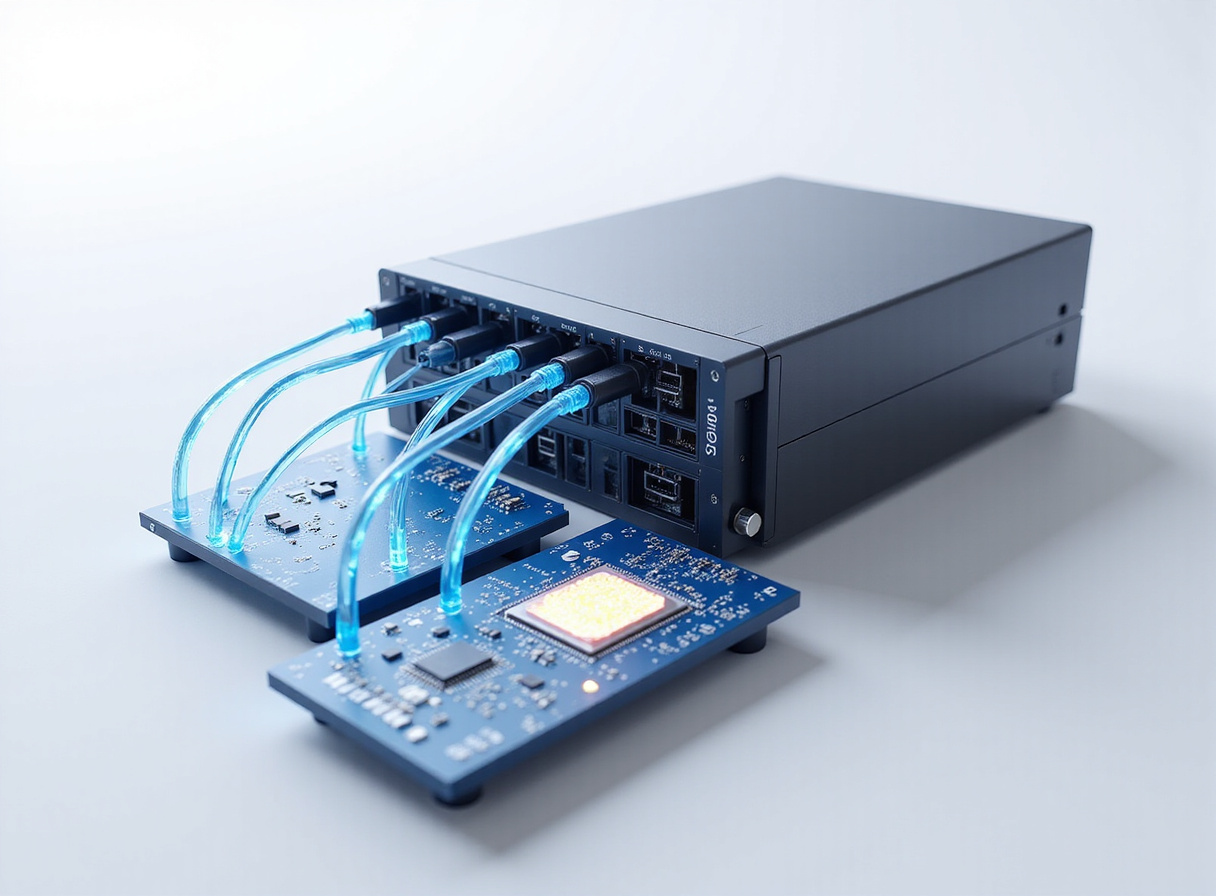
However, a brilliant algorithm is useless if it can’t operate in the real world. This led to the second pillar: a purpose-built processor, a challenge that fell to CTO Andrew Casper. The core problem was latency, which refers to the delay between a sound entering the hearing aid and the processed sound reaching the ear. In hearing aids, even tiny delays can cause an unnatural, disorienting experience. Casper’s team determined that any delay over 10 milliseconds would shatter the illusion of reality. No off-the-shelf processor could run Lovchinsky’s complex algorithms with such speed and efficiency. The only solution was to design their own custom chip [5], an arduous and costly endeavor that would take years of development before a single device could be tested. Fortell’s technological edge, therefore, stems directly from this synergy of proprietary Spatial AI algorithms and a custom-designed chip enabling real-time, low-latency audio source separation.
This ambitious, multi-year research and development effort required the third pillar of the trinity: massive financial backing. When de Jonge and Morris pitched the idea to Thrive Capital’s Joshua Kushner, he immediately agreed to provide the initial funding. This early confidence paved the way for subsequent investment rounds, bringing the company’s total funding to a staggering $150 million. This war chest, secured from prominent investors including Kushner, Antonio Gracias, and KKR’s Henry Kravis, provided the long runway necessary to solve the deep science problems at the heart of their mission, years before a commercial product was even in sight.
The Science of Hearing: A Clinical Showdown and the Question of Proof
But glowing testimonials from Hollywood A-listers and titans of industry, however compelling, do not constitute scientific proof. To move beyond anecdotes and substantiate its claims, Fortell sought to prove its superiority through rigorous clinical testing. The company contracted researchers from NYU Langone’s audiology and neuroscience departments to consult on a blind experiment comparing its device against a leading AI-powered competitor from the Swiss company Phonak. The test was specifically designed to emulate the chaotic ‘Cocktail Party Problem,’ the very scenario where traditional hearing aids falter, by presenting speech from one direction amidst distracting chatter from others.
The researchers had set a benchmark for success: a 4-decibel improvement over the rival would be considered a home run. The results, however, were staggering. An NYU Langone-consulted study suggests Fortell significantly outperforms a leading competitor (Phonak) by 9.2 dB in challenging multi-talker environments, more than doubling the target for a decisive win. The study’s conclusion was unequivocal: “In the most challenging multi-talker environment participants had 18.9X higher odds of understanding speech versus the top AI hearing aids on the market today.” [6]
Naturally, such a dramatic result invites scrutiny. When presented with the findings, Phonak questioned the methodology, noting the lack of industry standards for such comparative studies and suggesting that tests can be designed to enhance a specific product’s performance. This critique holds weight. The scientific study, while impressive, was company-funded and designed to highlight Fortell’s strengths, raising questions about its generalizability and full objectivity without broader independent validation. This carefully constructed environment, while relevant, may not represent the full spectrum of auditory challenges users face daily.
Beyond the clinical data, the ‘miracle’ effect reported by the exclusive circle of beta testers warrants a closer look. The perceived success could be partly attributed to an ‘insidery placebo effect,’ where the hype and exclusivity surrounding the device could influence perception. Furthermore, the extensive, personalized tuning provided by Fortell’s dedicated audiologists – a level of white-glove service not always standard – could be a significant factor in user satisfaction, complicating efforts to isolate the pure technological benefit from the premium support experience.
The Velvet Rope Strategy: High Price, Limited Access, and Future Risks
With its technology validated and a waiting list of influential figures, Fortell is eschewing a broad launch for a meticulously curated ‘velvet rope’ strategy. The company is opening its doors at a single, posh Park Avenue clinic, designed to serve only a few dozen customers per week. This ‘white-glove’ approach, complete with extensive professional fitting and tuning by audiologists, comes with a price tag of $6,800, prompting many to wonder how much does 1 hearing aid cost for such advanced technology. This positions the device not merely as a medical necessity but as a luxury good, accessible only to a select clientele who can afford both the cost and the journey to its exclusive Manhattan location. This go-to-market plan creates a stark and uncomfortable contrast with founder Matt de Jonge’s original, heartfelt motivation: to solve the hearing loss problem for people like his grandparents, who drifted into isolation. The high price point, which significantly exceeds what is the average cost for a hearing aid, combined with the fact that Medicare and many private insurance plans do not cover such devices, effectively excludes the vast majority of the population who could benefit from this technology, reserving it for the wealthy elite.
This exclusive strategy, while generating buzz, is fraught with significant long-term risks. The most immediate is Economic Risk; the premium price and lack of insurance coverage will severely limit market adoption, thereby impacting the overall hearing aid market size and preventing the technology from reaching critical mass. This feeds directly into Reputational Risk, as the ‘1 percent’ launch could provoke a public backlash, framing Fortell as a company that serves billionaires while the founder’s humanitarian goals are sidelined. Furthermore, the model itself presents a Market Scaling Risk. The very ‘white-glove’ service that ensures a premium experience is incredibly difficult to expand rapidly, potentially trapping Fortell as a niche player. Finally, this slow, deliberate rollout creates a Technological Risk, giving deep-pocketed competitors a crucial window to catch up and potentially neutralize Fortell’s innovative edge before it can establish a dominant market position.
Expert Opinion: Specialized AI as the Next Frontier
At NeuroTechnus, we recognize the profound implications of innovations like Fortell, which vividly illustrate how advanced AI can tackle deeply human challenges. The ability to solve the ‘Cocktail Party Problem’ through sophisticated ‘source separation’ and ‘Spatial AI’ is a testament to the growing power of real-time, complex data processing. This principle of specialization mirrors our own experience. Just as Fortell’s custom chip is crucial for low-latency audio, specialized AI architectures are vital for our advanced chatbots and automation systems to accurately interpret complex user queries and operational data streams, ensuring precision and responsiveness. These advancements underscore a critical industry trend, reflecting current hearing aid trends: AI is moving beyond general-purpose applications toward highly specialized, performance-driven solutions. This trajectory promises to unlock new levels of efficiency and capability, fundamentally transforming how we interact with technology and solve intricate real-world problems across all sectors.
Fortell stands at a fascinating crossroads, embodying both the immense promise and the potential peril of advanced AI. On one hand, the technology offers a near-miraculous solution to the isolating “Cocktail Party Problem,” backed by glowing testimonials from the influential and data suggesting a monumental leap in performance. On the other, its debut as an exclusive, high-cost luxury item creates an echo chamber for the elite, seemingly at odds with its founder’s mission to combat the loneliness of hearing loss. The company’s future could unfold in several distinct ways. In the most optimistic scenario, Fortell successfully scales its technology, finds ways to reduce costs and expand distribution, eventually becoming a widely adopted solution that revolutionizes hearing aid accessibility and quality for millions globally. A more neutral outcome sees Fortell establish itself as a highly successful, niche luxury hearing aid brand, serving a wealthy clientele but struggling to significantly impact the broader market. Conversely, a negative path exists where competitors quickly replicate or surpass Fortell’s technology, or the high price and limited access lead to slow adoption, relegating it to a minor player. Ultimately, Fortell’s story is a microcosm of a larger challenge, forcing us to ask a critical question: how can society ensure that life-changing AI innovations benefit everyone, not just those who can afford a premium?
Frequently Asked Questions
What is Fortell and what specific problem does it aim to solve?
Fortell is an AI-powered hearing aid that has emerged as a coveted status symbol, particularly among New York City’s elite. Its core mission is to conquer the ‘Cocktail Party Problem,’ which involves isolating speech with stunning clarity in chaotic, noisy environments, a challenge that traditional hearing aids have historically struggled to overcome.
How does Fortell’s technology work to provide a superior hearing experience?
Fortell’s technological edge stems from a synergy of proprietary Spatial AI algorithms and a custom-designed chip. The AI, developed by Igor Lovchinsky’s team, masters ‘source separation’ to isolate desired speech from background noise, while Andrew Casper’s custom processor ensures real-time, low-latency audio processing, crucial for a natural and non-disorienting experience.
What clinical evidence supports Fortell’s claims of performance superiority?
An NYU Langone-consulted study suggests Fortell significantly outperforms a leading competitor (Phonak) by 9.2 dB in challenging multi-talker environments, more than doubling the target for a decisive win. The study concluded that participants had 18.9X higher odds of understanding speech with Fortell versus top AI hearing aids on the market today.
What is Fortell’s market strategy and what are its potential implications?
Fortell employs a ‘velvet rope’ strategy, offering its device at a single, exclusive Park Avenue clinic for $6,800, serving only a few dozen customers weekly. This high price and limited access position it as a luxury good, raising concerns about economic risk due to limited market adoption, reputational risk for serving only the wealthy, and market scaling risk for its ‘white-glove’ service model.
What was the personal motivation behind Fortell’s founder, Matt de Jonge?
Co-founder and CEO Matt de Jonge’s mission was deeply personal, ignited by the regret of watching his grandparents retreat into social isolation due to their inability to follow conversations despite using expensive hearing aids. He felt remorse, believing their subsequent isolation hastened their cognitive decline, which fueled his quest to build a better hearing aid.